
How the back-to-back European champs are rewriting history
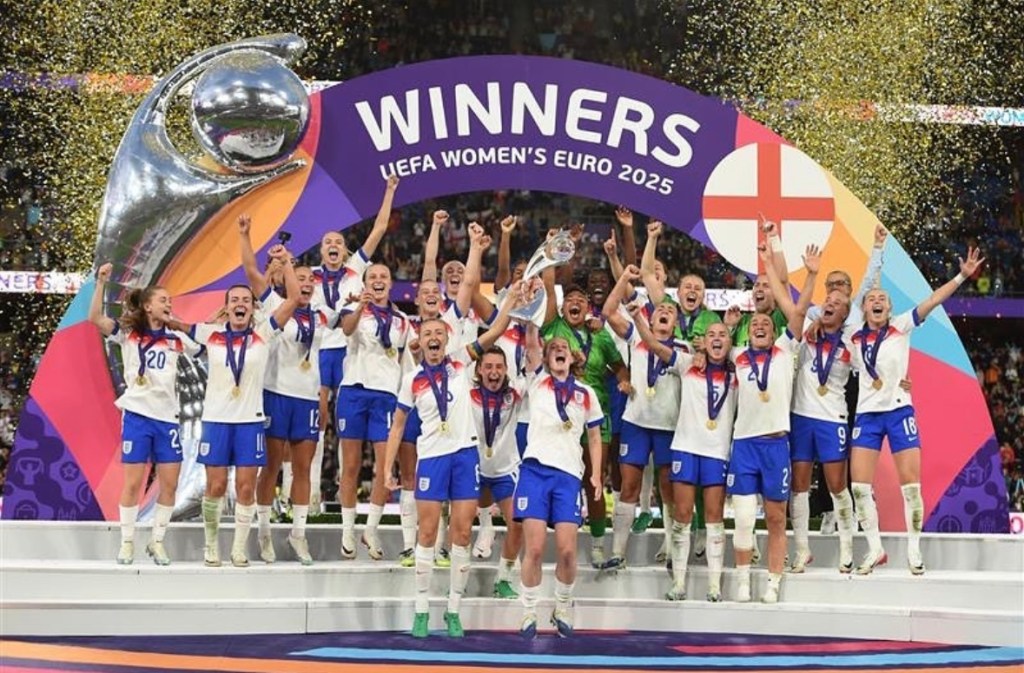
“Football is quite unsuitable for females and ought not to be encouraged.” – FA, December 1921
Following that landmark statement, women’s football was banned for a further 50 years. During that time, the game was held back—left without proper support, funding, or visibility. It’s a stark reminder of just how far the women’s game has come, and why the progress we’re seeing now matters so much.
Making up for lost time
For most of its history, women’s football in England was not just overlooked—it was actively held back. Now, the Lionesses objectives are clear: to win, to lead and to keep raising the standard.
The Lionesses’ rise to the top has been anything but smooth. As recently as 2005, England’s women were playing in front of crowds of just a few thousand, with little to no TV coverage and minimal press attention. Many of the players held second jobs, balancing football with full-time work. Eniola Aluko, former England Striker, reflected on that time: “There was no infrastructure, there was no financial support.” Even as a senior international, Aluko earned around £100 a week, meaning she was forced to juggle her sporting career with law school, just to build a future beyond the pitch.
 This Feels Timely
Leave a comment